
How To Spot Fake Shops: When the Bargain Shops You
by Daniel
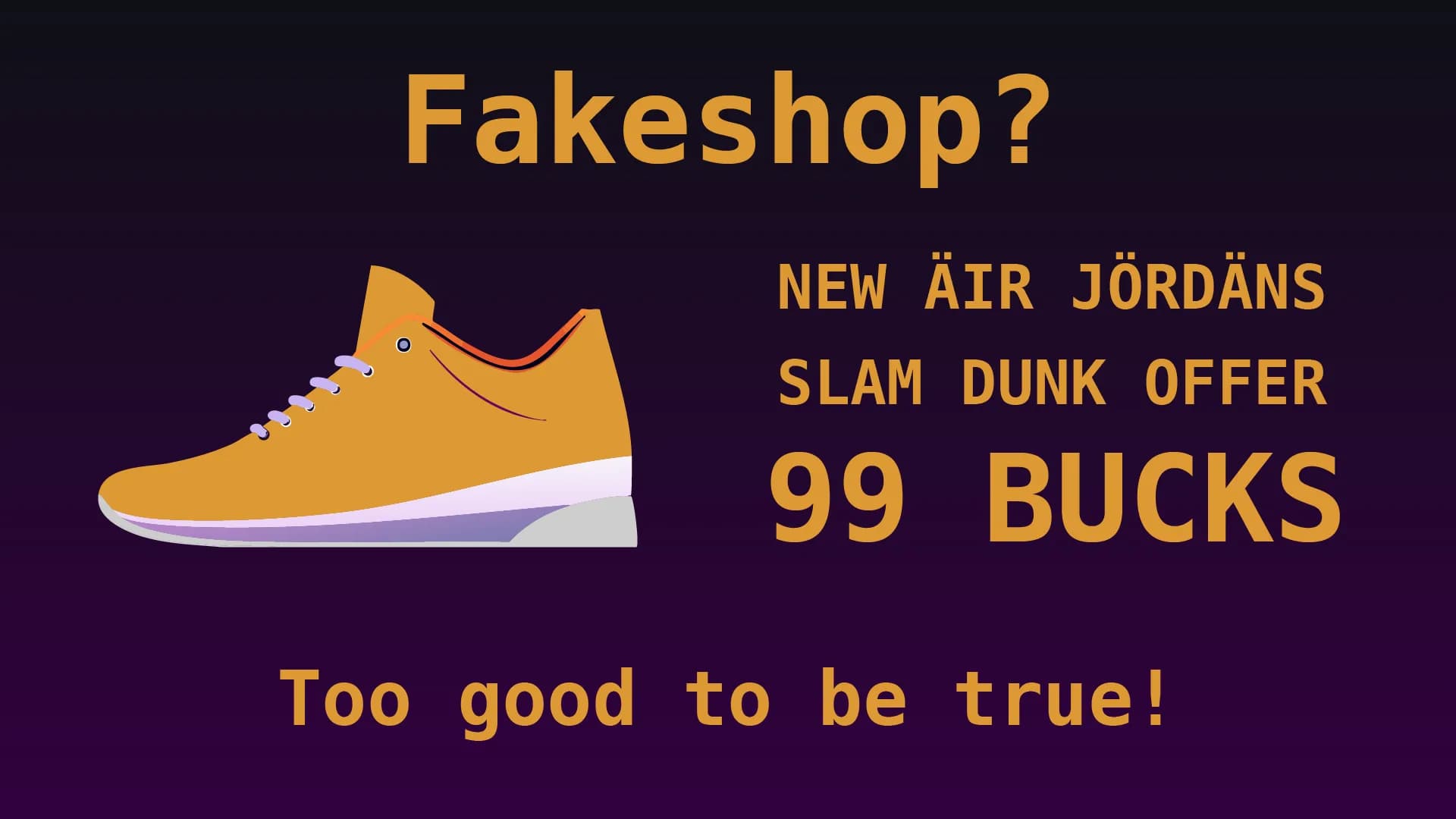
Too good to be true — and that's exactly the scam
For reasons I won't get into, today it's about something we all do, usually without thinking twice: buying stuff online. Right, Dave? And yes - that's security too. Everybody does security. The instant you hit "Buy now," you've made a trust decision. The only question is whether you made it, or whether it got made for you.
Because on the other end there might not be a merchant at all - just someone who wants exactly one thing: your money, your data, and then to never hear from you again. Let's see how that plays out.
The scale: no, this is not a fringe problem
The sober numbers first, so we're clear this isn't about a few unlucky souls. Germany's consumer-protection Fake-Shop Finder has logged over 100,000 fake shops since 2022 - and finds roughly 1,800 new ones every month. About one in five online shoppers has been burned at least once, at an average loss of around €200 a head. Peanuts? In aggregate, it's hundreds of millions in damage per year.
And here's the part that stings: that's the picture before AI really got going.
The new generation: AI made fake shops pretty
Fake shops used to be easy. Spelling like a wet bag of letters, blurry product photos in glorious 240p, a design straight off a 1998 GeoCities page. The scammers were lazy, and their laziness was your early-warning system.
Those days are gone. With generative AI, scam shops now look as polished as the real thing: clean copy, razor-sharp product photos, pixel-perfect rip-offs of real brand designs, plus fake reviews by the dozen. The classic tells - typos, ugly layout, that funny feeling in your gut - have lost their teeth. In 2026, "looks legit" no longer means "is legit." A bit sad, and deeply uncool.
Nastier still is the delivery route. You don't even have to go looking for these shops anymore - they come to you. According to Germany's federation of consumer organisations (vzbv), roughly half of the fake shops they examined run paid ads on Google or Meta. Translation: the scam ad shows up right in your Instagram feed, between your cousin's reel flexing outside a rented supercar and an AI-generated cat video. Not some dark back-alley of the internet. Your feed, bro.
How to catch them anyway
The good news: a few things even the best AI can't paint over. First, the rule to get tattooed somewhere visible: a single red flag proves nothing. Real bargains exist. Sales are a thing. A low price alone doesn't make someone a scammer. It's the combination that should make you squint:
- Upfront payment only. The classic. If, at the end, every payment method with buyer protection is gone and only "wire transfer in advance" is left - walk away. Favourite trick: the shop shows you five payment options, and at the final step they're all suddenly "temporarily unavailable" - except prepayment. How surprising.
- Missing or garbage legal notice. No imprint, an address that doesn't exist, a copy-pasted block of text with no real company behind it - or an imprint naming a country that has nothing to do with where the shop pretends to be based. A little imprint poem for you: from basic to fancy, with plenty of flair - a whole load of crap can still live there.
- The domain is a newborn. Registered last week, but supposedly "trusted for 20 years"? Nope. With a bit of luck, the shop's age and other oddities also turn up in the consumer-protection Fake-Shop Finder.
- Fake trust seals. Fake shops slap on Trusted Shops and TÜV logos like it's a sticker album. The test: click the seal. A real one links to a verifiable certificate. A fake one is just a picture and does - nothing.
- A thematic plot twist. A domain that used to be about garden plants is suddenly selling PlayStations and brand sneakers. That's a hijacked site with a fresh coat of paint.
Uncle Dave ordered the €79 PlayStation anyway. Prepayment, obviously. Right, Dave?
Your shield: check before you pay
You are not helpless here. You have tools - use them, it takes 60 seconds:
- The Fake-Shop Finder. Mentioned above already: consumer organisations run a free tool where you just paste in the URL. It tells you whether the site is already flagged. First move, every time.
- Investigate yourself. Shop name plus "scam," "fake," or "reviews" into a search engine. If page one is already a queue of victims, you have your answer.
- Reviews - but the right ones. Not the five stars on the shop's own page (the scammer wrote those, obviously), but independent platforms like Trustpilot or Google Reviews.
- Click the seal. See above. A seal that leads nowhere is décor.
Sounds like effort? It isn't. It's the difference between 60 seconds of checking and €200 you'll never see again.
Don't pay like a muppet
If you take just one thing from this article, make it this: never pay by advance transfer. Once the money's gone via prepayment, getting it back is next to impossible. Gone. Forever. Bye.
Choose payment methods with buyer protection instead. Some payment providers will claw your money back if nothing arrives. And even the humble direct debit is your friend: you've got up to eight weeks after the debit to reverse it. Prepayment gives you nothing. Buyer protection gives you a second door. Take the second door - we like second doors around here.
Too late? Then now, immediately, in this order
Getting caught is nothing to be ashamed of - it's happening to sharp people precisely because the fakes got this good. But now every minute counts:
- Call your bank. If something feels off or no confirmation email ever shows up: ask about a chargeback / whether the transfer can still be stopped. With prepayment the window is brutally short — sometimes it closes in seconds — but trying costs nothing.
- File a police report. Online or in person. Even if it feels hopeless: no report, no prosecution — and you often need it for the bank anyway.
- Report the shop. To consumer protection and the Fake-Shop Finder. That way you might just save Uncle Dave next time. Right, Dave?
- Use your buyer protection. If you paid with a method that includes buyer protection and the goods still haven't shown up after a week — even from a shop based in the EU — check the shipping status and contact the seller. If they start weaseling or don't reply within 48 hours, trigger the payment provider's buyer-protection claim. Better to open a ticket and pull it later than to find out down the line that the animal your leather jacket is supposedly made of hasn't even been poached yet.
What I'm not promising you
Now the honest bit, because this is the Honeypot Files and not a sales brochure: there is no 100%. No tool catches every shop, the Fake-Shop Finder only spots new ones once they surface, and the scammers are fast — many shops vanish after a few weeks and reappear under a new name, like a Sicilian restaurant. Your residual risk doesn't drop to zero. But it drops dramatically the moment three reflexes become second nature: check before you click. Never pay upfront. And a price that's too good to be true is exactly that.
That was a quick tour through the bargain minefield. No purchase is ever "guaranteed safe" — but you can stop being the easiest target in the room. Help your grandma bookmark the Fake-Shop Finder. Don't be Dave, the guy who ordered the €79 PlayStation.
Happy browsing. Never pay upfront. Think purple.